A Guide to Selecting TV Height for Any Room

A TV can be perfectly centered on a wall and still feel wrong the moment you sit down. If you find yourself lifting your chin during a movie or looking down at the screen from the sofa, the issue is usually placement, not the television itself. This guide to selecting TV height helps you choose a comfortable, clean-looking position before any holes are drilled.
For most Miami homes, condos, rentals, offices, and waiting rooms, the goal is simple: place the screen where people will actually watch it. That means considering seating height, room layout, screen size, viewing distance, and the wall behind the TV. A precise installation protects your wall, keeps the setup polished, and makes everyday viewing easier on your neck and eyes.
Start With Eye Level, Not the Wall’s Center
The most reliable starting point is seated eye level. In a typical living room, the center of the TV screen should sit close to the viewer’s eye level when seated. For many adults on a standard sofa, that falls around 42 to 48 inches from the floor to the center of the screen.
That number is a guideline, not a rule that overrides your room. A low-profile couch, deep sectional, bar-height seating, or reclining chairs can change the correct height. Measure from the floor to your eyes while sitting in the seat you use most. Then mark that point on the wall with painter’s tape.
Next, find the vertical center of your television. Measure the TV’s full height and divide it by two. If the screen is 30 inches tall, its center is 15 inches from the top and bottom edges. Align that center with your seated eye-level mark whenever the room allows it.
A common mistake is measuring to the bottom of the TV. The bottom edge matters for furniture clearance and visual balance, but the center of the screen is what has the greatest effect on viewing comfort.
Use TV Size to Confirm the Right Height
Larger TVs naturally extend farther above and below the center point. That does not mean a 75-inch TV should be mounted dramatically higher than a 55-inch model. The center should still be driven primarily by your viewing position.
For example, if your eye level is 44 inches and you mount a 65-inch TV with a screen height of about 32 inches, the bottom of the screen may land near 28 inches from the floor. That can feel lower than expected when you are standing, but it is often ideal from the couch.
Visual preference still matters. Some homeowners prefer the TV a few inches higher to create more clearance above a media console or to make the wall feel more balanced. A small adjustment is usually fine. Raising the screen 10 or 15 inches just to fill empty wall space is where comfort can suffer.
Before mounting, tape the TV’s approximate outline on the wall. Sit in your usual spot and look at the outline for several minutes. This simple check can reveal whether the proposed height feels natural, crowded, or too high before installation begins.
Account for Your Seating and Viewing Distance
Your TV height and viewing distance work together. If seating is close to the screen, even a small height error is more noticeable. A screen mounted too high can make viewers look upward throughout a full game, movie, or work presentation.
In a larger living room, a slightly higher position may be acceptable because the viewing angle is less severe. The same is true in rooms where people watch from several locations. A family room with a sectional, accent chairs, and an open kitchen may need a practical middle ground rather than a placement tailored to one seat.
Consider the primary activity in the room. For focused movie watching, prioritize the main seating area. For a casual kitchen, gym, or entertainment space where people often stand, a moderately higher TV can make sense. The right choice depends on how the room is used most often, not on a one-size-fits-all measurement.
Living Rooms and Media Rooms
In a living room, aim for a relaxed, straight-ahead viewing angle from the main sofa or sectional. Keep enough space between the bottom of the TV and the console below it so the arrangement does not look cramped. In many setups, 4 to 8 inches of clearance looks intentional, although a taller console or soundbar may require more.
If you plan to add a soundbar, measure it before setting the TV height. The soundbar should not block the bottom of the screen, interfere with the TV’s remote sensor, or force the TV higher than is comfortable.
Bedrooms
Bedroom TVs are often mounted higher than living room TVs because viewers watch while reclining or lying in bed. Start by measuring your eye line in your normal viewing position, not while sitting upright on the edge of the mattress.
A tilting mount can be especially useful in a bedroom. It lets the screen angle downward slightly, improving the viewing angle when a higher placement is necessary. Tilt helps, but it should not be used as an excuse to mount the TV near the ceiling.
Fireplaces and High Walls
Mounting a TV above a fireplace is common, but it is rarely the most comfortable location. The mantel and fireplace opening push the screen higher than seated eye level, often creating an upward viewing angle. Heat from the fireplace can also be a concern depending on the design and use of the unit.
If a fireplace wall is your only practical option, use a mount that tilts downward and choose the lowest safe position above the mantel. Confirm the wall structure, clearance, and heat exposure before moving forward. In some rooms, placing the TV on an adjacent wall delivers a better result for both comfort and long-term TV performance.
Check the Mount and Wall Before Finalizing Height
The mounting plate on the back of the TV is not always centered vertically. On some models, the mounting holes sit lower or higher than the screen’s center. This affects where the wall bracket must be installed to achieve your planned final height.
Measure from the TV’s top edge to the center of its VESA mounting holes, then compare that with your mount’s wall plate and bracket design. Skipping this step can leave the finished TV several inches above or below your mark.
Wall type matters too. A secure installation should be anchored into studs or use hardware rated for the wall material and the television’s weight. Drywall alone is not a dependable mounting surface for most TVs. Concrete, brick, metal studs, tile, and specialty wall finishes require the right approach and tools.
This is also the time to plan cable concealment. Power cords, HDMI cables, streaming devices, and soundbar wiring all need a route. A clean wall-mounted TV should look intentional from every angle, not like an afterthought with loose cords hanging below the screen.
Avoid These Height Selection Mistakes
The first mistake is mounting the screen based on standing eye level. A TV is usually watched while seated, so standing measurements almost always place it too high. The second is centering the TV within the entire wall without considering furniture and seating. Architectural symmetry can look great, but comfort should lead the decision.
Another frequent issue is forgetting the mount’s geometry. Measuring only the TV, rather than the TV and mount together, leads to placement surprises. Finally, homeowners sometimes select a fixed mount before they know whether a tilt or full-motion mount would better suit the room. Fixed mounts provide a close, clean profile, while tilt mounts help with modestly higher locations and full-motion mounts offer more flexibility for corner placements or multiple viewing areas.
When Professional Placement Makes Sense
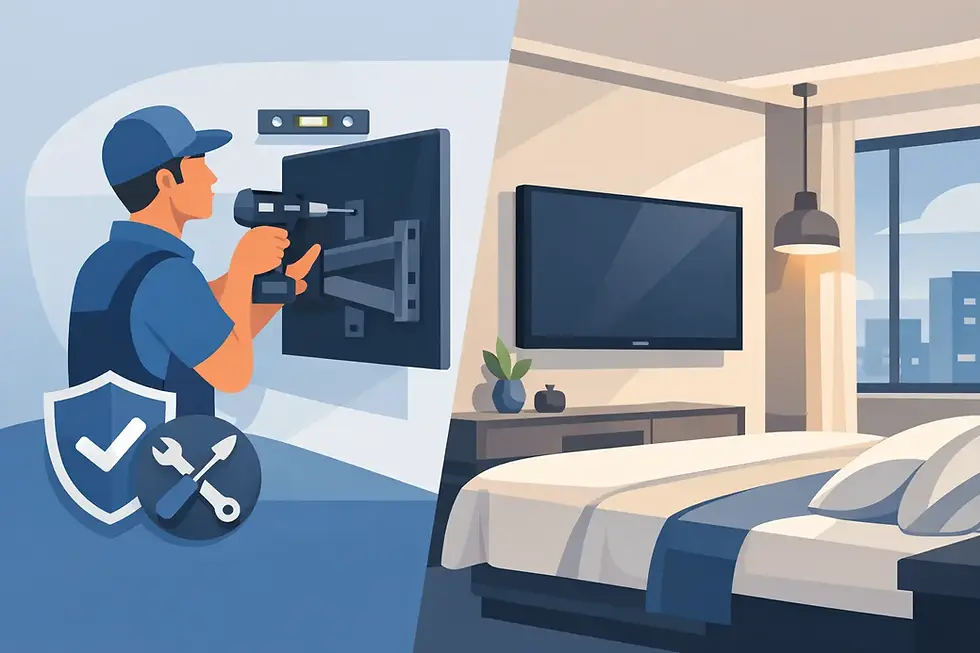
A careful measurement can prevent a costly redo, especially with large TVs, high-value walls, fireplaces, tile, concrete, or multi-TV installations. Professional mounting also helps ensure the bracket is properly secured, the screen is level, cables are managed neatly, and the finished height matches the way you use the room.
Pronto Handyman provides secure TV mounting for Miami homeowners, renters, property managers, and businesses that want a precise, clutter-free result without the risk of trial and error. For a standard living-room setup or a more challenging wall, having an experienced technician confirm placement before drilling can save time and protect your space.
Take a few minutes to sit where you watch, mark your eye level, and picture the TV with the furniture and cables in place. The best height is the one that disappears while you are watching - comfortable, level, secure, and exactly where it belongs.