


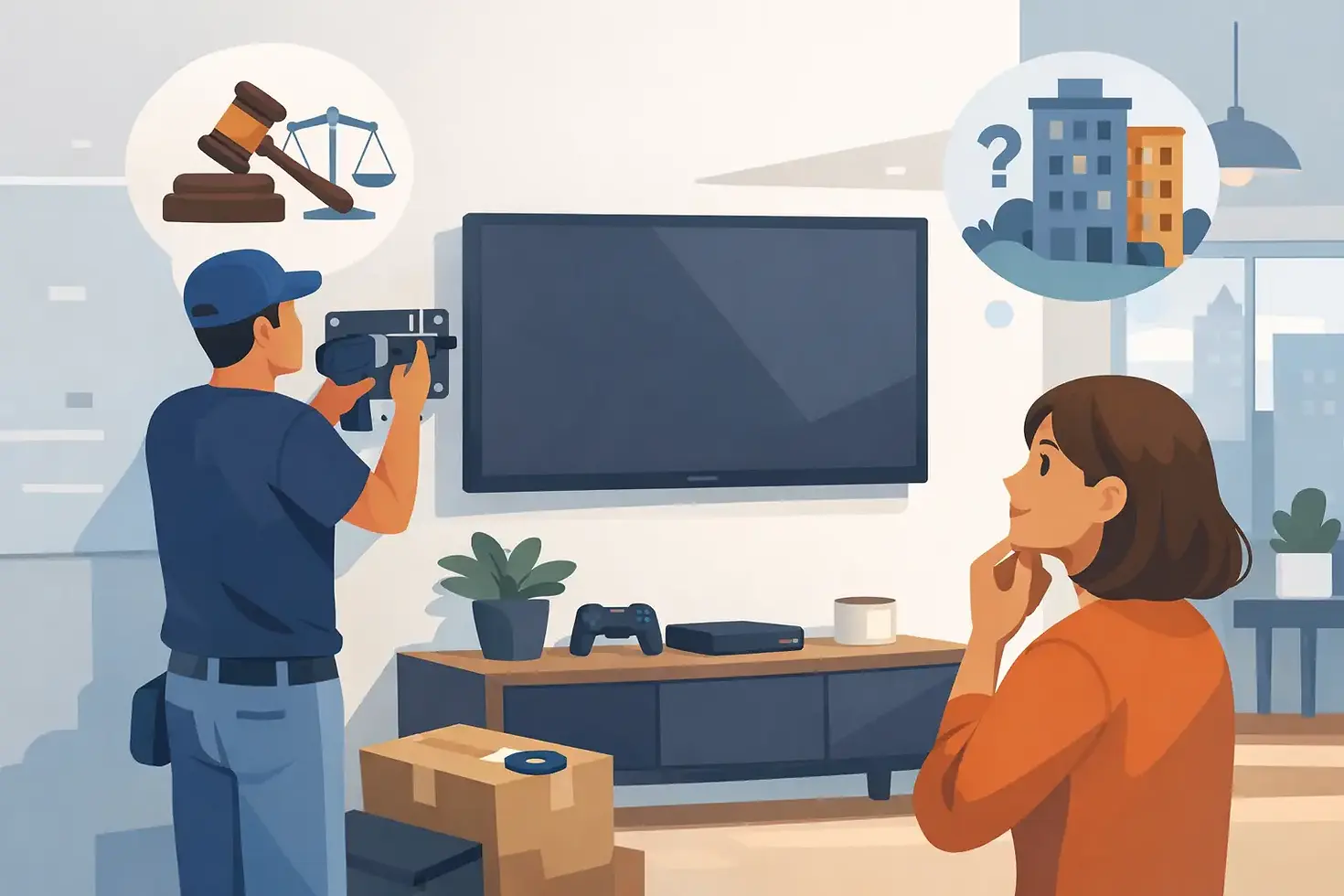
Can Renters Mount Televisions Legally?

That blank wall across from the couch looks perfect for a screen, but one question usually stops the plan: can renters mount televisions without getting in trouble with the landlord? The short answer is yes, sometimes - but the real answer depends on your lease, your wall type, and how the installation is handled. A mounted TV can make a rental feel cleaner, more modern, and more comfortable. It can also lead to repair charges if the job is done carelessly.
For most renters, this is not really about whether a TV can physically go on the wall. It is about whether the property owner allows it, whether the wall can support it safely, and whether the apartment can be returned to its original condition when the lease ends. Those details matter a lot more than the mount itself.
Can renters mount televisions in an apartment?
In many apartments, the answer is yes - but only with permission or under lease terms that allow minor wall modifications. Some landlords are flexible about a properly mounted TV because a few patched holes are relatively minor compared with major alterations. Others treat any wall penetration as unauthorized damage, especially in newer buildings or luxury rentals where appearance standards are strict.
The lease is the first place to look. If it says no alterations, no drilling, or no wall-mounted fixtures without written approval, take that seriously. If the language is vague, do not assume that means yes. It usually means you should ask before drilling.
Written approval is always better than a verbal okay. If management changes or there is a dispute at move-out, written permission gives you something clear to point to. A quick email can save a security deposit argument later.
Why landlords care more than renters expect
From a renter's point of view, a TV mount may seem like a few small holes. From a landlord's point of view, it can be a patching, repainting, and liability issue.
If a TV is mounted incorrectly and pulls out of drywall, the damage can go beyond cosmetic. It can leave large holes, cracked drywall, damaged studs, and even broken flooring if the TV falls. Landlords also worry about hidden electrical lines, plumbing in some walls, and uneven patchwork that has to be redone before the next tenant moves in.
That is why professional installation often makes a difference. A secure mount installed at the right height, anchored correctly, and finished neatly is very different from a rushed DIY attempt. Clean workmanship lowers the chance of damage now and the chance of repair bills later.
What to check before you mount anything
Before buying a mount or measuring the wall, check three things: your lease, the wall, and the TV itself.
Start with the lease and management approval. If your building has maintenance rules, HOA-style standards, or move-out restoration requirements, those need to be clear up front.
Next, look at the wall type. Standard drywall over wood studs is usually the most straightforward setup for a safe TV mount. Concrete, brick, metal studs, tile, and plaster can all be mountable too, but they require the right anchors, tools, and experience. In many Miami condos and apartment buildings, concrete walls are common, which changes the installation method completely.
Then consider the TV size and mount type. A lightweight bedroom TV is one thing. A large living room screen on a full-motion mount puts much more stress on the wall. The heavier the TV and the more movement the mount allows, the more important proper anchoring becomes.
The biggest mistake renters make
The most common mistake is assuming any wall can handle a TV with a few generic anchors from a hardware store. Drywall alone is not a reliable support for most TVs. Even if it seems secure at first, vibration, adjusting the arm, or the TV's weight over time can cause failure.
The second mistake is placing the TV without thinking about what happens later. Poor placement can leave unnecessary holes when the setup changes. A mount installed too high, too far off-center, or without considering furniture layout often gets removed and redone. That means more patching and more wall damage.
A careful install solves both problems. It starts with locating structure behind the wall, choosing the right mounting hardware, and placing the screen precisely so it works for the room the first time.
Can renters mount televisions without drilling?
There are no-drill products marketed to renters, but they are not a universal solution. Some freestanding TV stands mimic a wall-mounted look, and those are often the safest rental-friendly option because they avoid wall damage altogether. Adhesive systems and ultra-light hanging methods exist too, but they are usually limited by TV size, wall material, and safety concerns.
If you are trying to mount a larger flat-screen, especially in a living room, no-drill options are often more compromise than solution. They may not deliver the clean, secure result most people want. They also may not satisfy the real goal, which is a stable setup with hidden cords and a finished appearance.
For renters who want the modern mounted look, the better question is not whether drilling can be avoided at all costs. It is whether the installation can be done correctly, with approval, and with minimal repair needed later.
How to reduce the risk of losing your deposit
If you want a mounted TV in a rental, the smartest approach is simple. Ask first, install correctly, and document everything.
Keep the landlord's written approval. Take a photo of the wall before installation and again after the TV is mounted. If the lease requires restoration at move-out, plan for drywall patching and paint touch-up in advance rather than waiting until the last week.
It also helps to avoid unnecessary damage from the start. One well-placed mount is easier to repair than several failed attempts. The same goes for cable management. A clean external cord cover may be more renter-friendly than cutting into the wall for full in-wall concealment if the lease does not allow that level of modification.
When professional installation makes more sense
Renters often think hiring a pro is only for oversized TVs or luxury homes. In reality, rentals are exactly where professional work can pay off. You have less margin for error when the property is not yours.
A qualified installer can tell you whether the wall is suitable, where the studs or solid backing are, what mount style makes sense, and how to keep the setup clean without overcomplicating the job. That matters even more in apartments with concrete walls, tricky layouts, or building rules.
Professional installation also helps when aesthetics matter. A crooked TV, visible dangling cords, or a mount placed too high can make the whole room feel off. Most renters want the same thing homeowners want: a secure install, precise placement, and a finished look that makes the space feel better immediately.
For Miami renters dealing with concrete, high-rise living, or limited time, having a trusted local expert handle the job is often the fastest path to a result that looks right and stays safe. That is one reason many renters choose a service like Pronto Handyman instead of guessing their way through it.
What landlords usually accept at move-out
Most landlords do not expect a wall to remain untouched forever. What they usually expect is that any modification is either approved and professionally done, or restored properly before turnover.
A few clean holes that are patched smoothly and painted to match are often manageable. Large torn-out sections of drywall, chipped tile, or visible paint mismatches are where costs start adding up. If your landlord approved the mount, ask whether they want the bracket left in place or removed at move-out. Some owners would rather keep a professionally installed mount than have the wall repaired.
That small conversation can save you money. If the next tenant wants a mounted TV too, leaving the mount may actually be the easiest option for everyone.
So, can renters mount televisions?
Yes - many renters can mount televisions, but only when the lease, the landlord, and the wall all support that decision. This is one of those home upgrades where the difference between a clean result and an expensive mistake comes down to planning.
If you get approval, use the right hardware, and treat the wall like it matters, a mounted TV can be a smart upgrade even in a rental. And if you are not fully confident about drilling into someone else's wall, that hesitation is probably good judgment. A safe, neat installation is always cheaper than fixing a bad one later.
A rental should still feel like home while you live there. The best upgrades are the ones that make the space work better now without creating problems when it is time to hand over the keys.


