Can You Mount TV Without Studs?
- Mario Menendez

- Mar 19
- 5 min read
If you’ve found the perfect wall for your screen and then realized the studs are nowhere near the right spot, the next question comes fast: can you mount tv without studs? The short answer is yes, sometimes. The better answer is that it depends on your TV’s size, the wall material, the mount style, and how much risk you’re willing to take with an expensive screen hanging over your floor.
A lot of homeowners and renters assume there’s a simple universal fix. There usually isn’t. Some no-stud mounting methods work well for lighter TVs on certain wall types. Others are a bad idea from the start, especially with larger screens, full-motion mounts, or older drywall. If your goal is a clean, secure setup that stays level and safe, the details matter.
Can You Mount TV Without Studs on Drywall?
This is where most of the confusion comes from. Drywall by itself is not structural support. It’s a finished wall surface, not the part of the wall designed to carry significant weight. So if by “without studs” you mean screwing a standard TV bracket directly into plain drywall with regular screws, the answer is no.
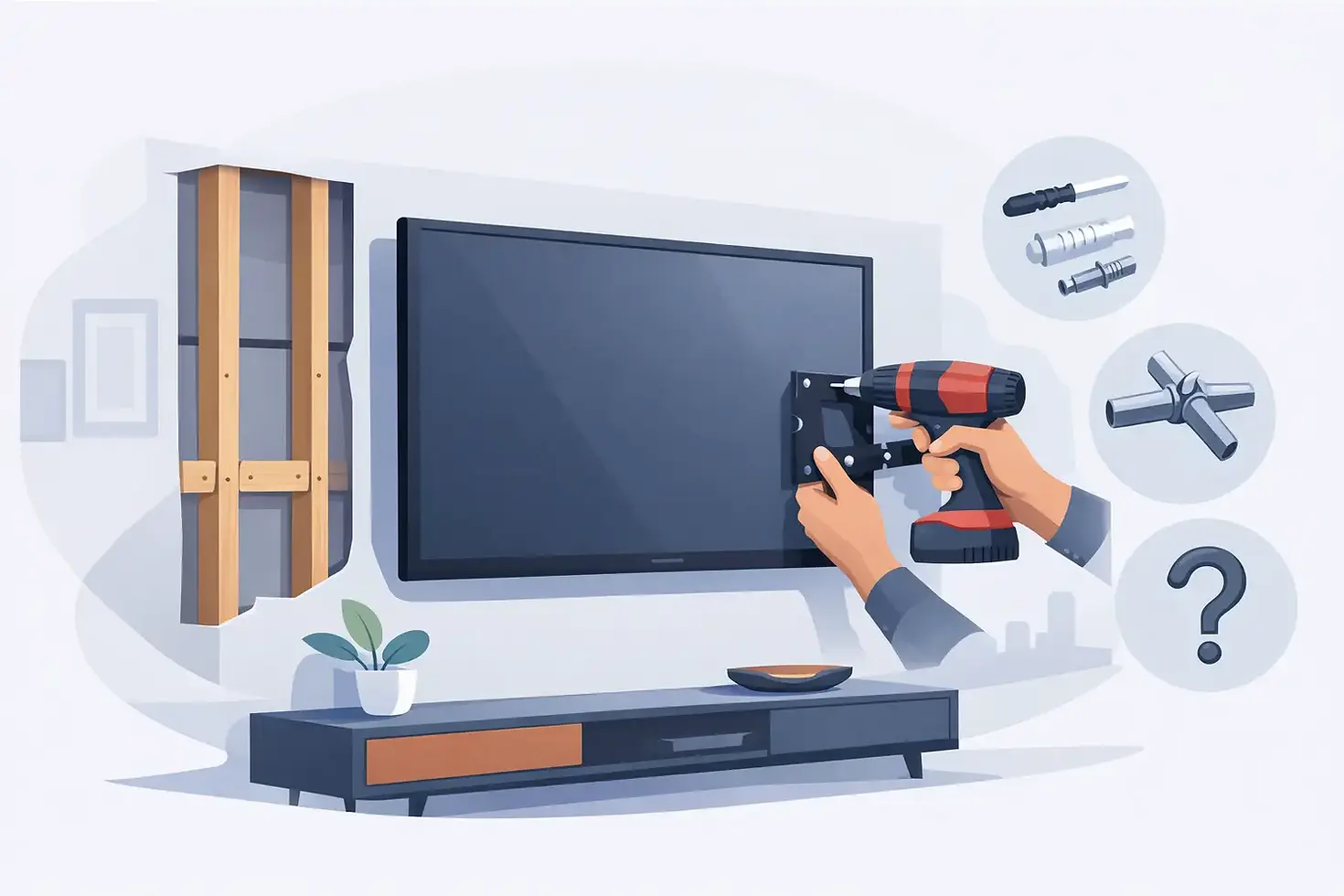
Where things change is when you use hardware specifically designed to spread the load. Heavy-duty drywall anchors, toggle bolts, or no-stud picture-style hangers can sometimes support smaller, lighter TVs. But that does not mean every wall and every TV is a fit.
There’s also a major difference between a fixed low-profile mount and a full-motion articulating mount. A fixed mount keeps the weight close to the wall. That reduces leverage and stress on the fasteners. A full-motion mount pulls the TV outward, which multiplies the force on the mounting points. A setup that might hold a 43-inch TV flush to the wall may fail if that same TV is placed on an arm that extends and swivels.
When a No-Stud TV Mount Can Work
A no-stud solution is most realistic when the TV is relatively light, the wall is in good condition, and the mount is fixed or tilting rather than full-motion. Some manufacturers make mounts intended for drywall installation using multiple small fasteners spread across a wide plate. These can work in the right situation because they distribute weight instead of concentrating it in just two or four screws.
That said, product packaging can make these systems sound more forgiving than they really are. Weight ratings are based on ideal conditions. Real walls vary. Drywall thickness varies. Previous patchwork, moisture damage, or hidden gaps behind the wall can all reduce holding power.
If this is a bedroom TV, a smaller guest room setup, or a lightweight screen in an area where the mount will stay mostly untouched, a no-stud mount may be worth considering. If it’s a large living room TV that gets adjusted often, mounted above a fireplace, or installed in a commercial space, you want a more secure method.
Wall Type Changes Everything
Before choosing hardware, you need to know what you’re mounting into. Drywall over wood framing is one situation. Plaster walls are another. Concrete, block, and brick are different again.
In many Miami-area homes and commercial buildings, concrete or masonry walls are common. Those walls do not rely on wood studs the same way interior framed walls do, and they can often provide an excellent mounting surface when the correct anchors and tools are used. On the other hand, interior partition walls may have metal studs, shallow cavities, or older materials that need a different approach.
This is one reason DIY TV mounting gets tricky fast. People often search for a no-stud solution when the real issue is that they’re dealing with a wall type that needs specialized anchors, drilling techniques, or placement planning.
The Biggest Risks of Mounting a TV Without Studs
The obvious risk is that the TV falls. That can damage the screen, the wall, furniture below, and anything nearby. It can also create a safety hazard for children or pets.
The less obvious problem is gradual failure. A mount can feel solid on day one and start loosening over time. Small movement, repeated adjustments, poor anchor installation, or a mount that sits slightly proud of the wall can slowly widen the holes and weaken the hold. By the time you notice a tilt or wobble, the installation may already be compromised.
There’s also the issue of placement. Even if a no-stud mount technically holds, it may not sit exactly where you want it. Many homeowners want the TV centered on a wall, aligned with furniture, or placed for ideal viewing height. If the wall structure doesn’t support that exact location, forcing the issue can lead to a weaker install.
Better Alternatives When Studs Aren’t in the Right Spot
Sometimes the best answer is not a no-stud mount at all. One option is mounting a plywood backer board into the studs, then attaching the TV mount to the board. This gives you more flexibility for centering the TV while still anchoring the load to structural framing. Done neatly, it can be painted to blend with the wall or hidden behind the TV.
Another option is choosing a mount with enough horizontal adjustment to hit the studs while still allowing the TV to sit close to center. This works well in many rooms and avoids overcomplicating the installation.
For masonry walls, the right concrete anchors can provide a very strong installation without any need for wood studs. In that case, the question isn’t really whether you can mount a TV without studs. It’s whether the installer is using the correct hardware for the wall.
Should Renters Try It?
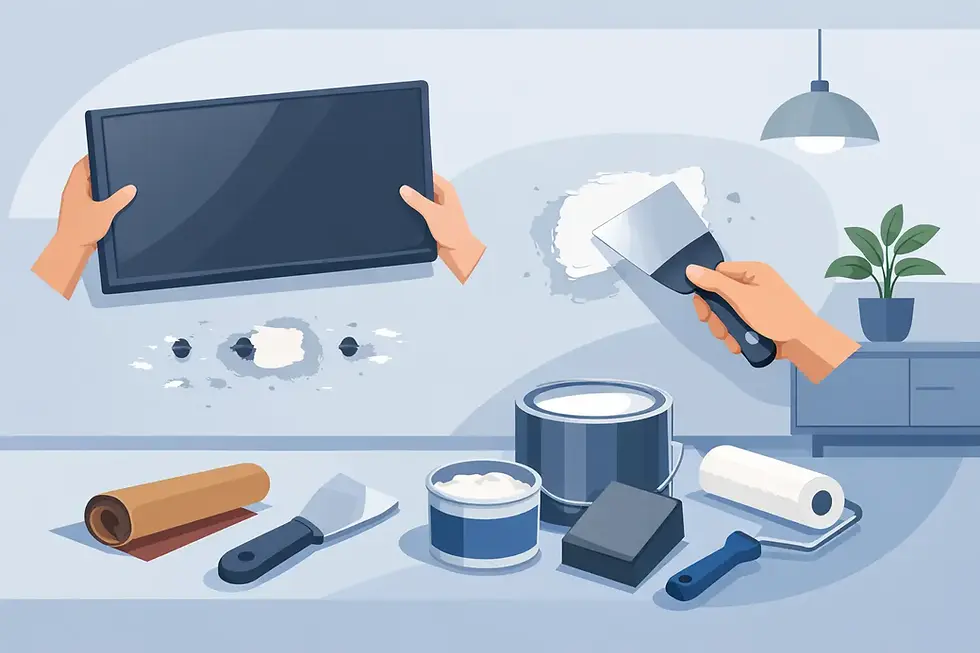
Renters have a slightly different calculation. Even if a no-stud mount is possible, wall damage can become an issue when it’s time to move out. Large anchors, toggle bolts, and specialty mounts can leave more than a few simple screw holes behind.
If you’re renting, it helps to think beyond whether the TV will stay up. Ask what the wall will look like later, whether the lease allows wall-mounted TVs, and whether you want visible patching when the mount comes down. In many cases, a professional install is the better move because the placement is cleaner, the hardware is matched to the wall, and the repair burden later is easier to manage.
When Professional TV Mounting Is the Safer Call
If your TV is large, your wall is questionable, or you want a full-motion mount, this is usually where DIY stops making sense. A professional can identify wall type, locate framing accurately, choose the correct hardware, and install the mount so the screen sits level, secure, and clean.
That matters even more if you care about cable concealment, outlet placement, soundbar alignment, or mounting multiple TVs across a home or business. A good install is not just about getting the bracket on the wall. It’s about making the final result look intentional.
At Pronto Handyman, TV mounting service is built around that exact goal: secure installation, precise placement, and a clean modern finish without the trial and error. For many customers, the value is not just saving time. It’s avoiding the expensive mistake of trusting the wrong anchors on the wrong wall.
A Simple Way to Decide
If your TV is small, the wall is solid drywall in good condition, and the mount is specifically rated for no-stud installation, you may have a workable option. If the TV is heavier, the mount extends from the wall, or you’re not fully sure what’s behind the surface, it’s smarter to slow down.
A wall-mounted TV should feel boring once it’s installed. No shifting. No second-guessing. No checking the bracket every few days. If you’re asking whether it will probably hold, that’s usually your sign to choose the more secure route.
The right answer is not always the fastest one. But when the screen stays safe, level, and exactly where you want it, that’s the part you’ll appreciate every day.