


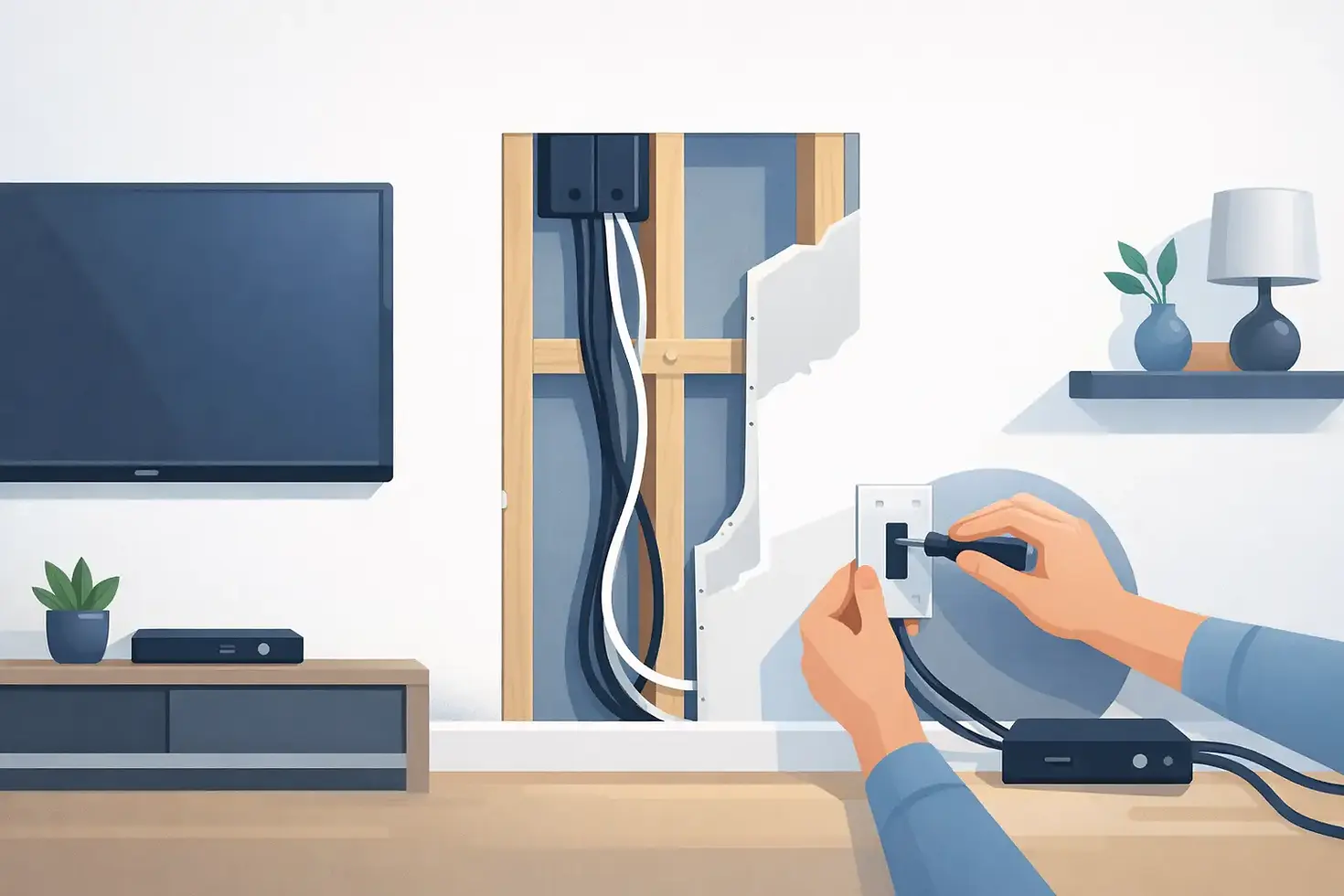
Hide TV Wires in the Wall the Right Way

A wall-mounted TV looks sharp right up until the cords start hanging down the drywall. That one detail can make a brand-new setup feel unfinished. If you want the clean, modern look most homeowners are after, learning how to hide TV wires in wall setups is the step that changes everything.
The good news is that you have more than one option. The less-fun truth is that not every option is equally safe, equally clean, or equally smart for your wall type. If you're deciding between a quick DIY fix and a professional install, it helps to know what you're actually getting into before you cut anything.
How to hide TV wires in wall without creating a bigger problem
Most people mean one of two things when they ask how to hide TV wires in wall spaces. They either want true in-wall cable concealment, where wires pass behind the drywall, or they want a surface solution that looks discreet without opening the wall.
True in-wall concealment usually gives the best result. You see the TV, not the cords. But it has to be done correctly. Power cables, low-voltage cables, and wall construction all matter. Running the wrong cord through the wall or skipping proper components can create safety issues and leave you with a setup that looks good for a month and causes problems later.
If that sounds like more risk than reward, you're not wrong. For many homeowners, the best path is a professional install that includes secure mounting, precise placement, and cable concealment done neatly from the start.
Start with the wires you actually have
Before you buy anything, look at what needs to disappear. Most TV setups include a power cord, one or more HDMI cables, and possibly Ethernet, optical audio, or coax. That mix matters because low-voltage cables like HDMI are handled differently from standard power.
This is where DIY plans often go sideways. People assume all wires can be pushed behind drywall the same way. They can't. If your plan involves sending the TV's factory power cord through the wall cavity, stop there and rethink it. A proper in-wall power kit or code-compliant solution is the safer route.
Your wall type also changes the job. Standard drywall over wood studs is usually the most straightforward. Concrete, brick, plaster, metal studs, or walls with fire blocks can make cable fishing harder and sometimes not worth the trouble for a first-time DIY project.
The safest options for hiding TV wires
There are really three common approaches, and each one fits a different situation.
In-wall power and cable management kits
This is the option most homeowners picture. You cut an opening behind the TV and another lower on the wall, install an in-wall power kit, and route your low-voltage cables between the two points. When done well, it's clean and close to invisible.
This approach works best when the wall cavity is accessible and the TV location is final. It also gives the best finished look for living rooms, bedrooms, offices, and conference rooms where a visible cord channel would stand out.
The trade-off is that it requires careful measuring, correct placement, and confidence cutting into drywall. If the TV mount is already installed too low, too high, or off-center, hiding the wires won't fix the bigger layout issue.
Paintable cord covers
A cord cover mounts to the wall surface and hides the wires inside a slim channel. Once painted to match the wall, it can blend in surprisingly well.
This is often the best choice for renters, concrete walls, or anyone who wants a clean result without opening the wall. It's also useful when the outlet and TV location don't line up well for an in-wall kit.
It won't look quite as invisible as true in-wall concealment, but it avoids cutting drywall and usually installs much faster.
Furniture-assisted concealment
If the TV sits above a console, media cabinet, or built-in, you may be able to route cords down discreetly behind furniture with minimal wall work. This is the least invasive option and sometimes the most practical one.
The downside is that it depends heavily on the room layout. If the furniture is shallow, off-center, or temporary, the hidden-cord effect tends to fall apart.
What a basic in-wall job involves
If you're set on doing it yourself, the process sounds simple on paper. Locate the studs, choose the wall openings, cut the access points, fish the cables through the cavity, and install the recessed boxes or cable pass-throughs.
In practice, the details matter. The TV should be mounted first or at least fully measured out. You want the upper opening hidden behind the screen, not peeking out below it. The lower opening should land near a power source and where your devices actually sit. If you use streaming boxes, soundbars, or gaming consoles, cable length needs to be part of the plan.
You also need to know what's inside the wall before cutting. Electrical lines, plumbing, blocking, and insulation can all turn a quick Saturday project into drywall repair. Even when the wall is clear, fishing cables can be frustrating if the stud bay isn't as open as expected.
Common mistakes homeowners make
The biggest mistake is treating every cord the same. A standard TV power cord is not the same as a low-voltage HDMI cable. Using the wrong type of setup inside the wall is one of the most common safety issues we see.
The second mistake is poor TV placement. Once the holes are cut and the wires are run, moving the TV even a few inches can leave you patching drywall. That is why secure, precise mounting should come before cable concealment, not after.
The third mistake is underestimating the wall itself. Miami homes and commercial spaces can have concrete, block, older plaster, or mixed construction that changes the install completely. A setup that works in one room may not work in the next.
Then there's the finish work. Crooked openings, loose plates, visible gaps, and hanging cables near the outlet can make a project look amateur even if the TV is mounted straight.
When it makes sense to call a pro
If you're mounting a large TV, working with brick or concrete, hiding both power and low-voltage cables, or installing multiple screens, professional help is usually the smarter move. The same is true if you want the job done fast and clean without buying tools you'll only use once.
A professional installer can usually spot problems early - stud placement, viewing height, outlet position, mount compatibility, wall type - before they become costly corrections. That matters more than most people expect. A cable-concealed TV setup only looks flawless when the mount location, wire path, and device layout are planned together.
For homeowners, renters with permission, property managers, and business owners, hiring a trusted local team often costs less than a failed DIY attempt plus wall repair. If you want a secure mount and hidden cords without the hassle, Pronto Handyman handles TV mounting and cable concealment with clean, modern results. Call now or book today if you'd rather have it done right the first time.
How to hide TV wires in wall setups when the wall says no
Sometimes the cleanest-looking option is not the best option for the structure in front of you. Solid masonry walls, fire stops, tile, and older construction can make in-wall routing difficult or impractical. In those cases, the right answer may be a low-profile surface raceway, a revised TV position, or adding a nearby outlet as part of a larger electrical plan.
That can feel like a compromise, but it often isn't. A well-placed cord cover painted to match the wall can look far better than a rushed in-wall job with patched drywall and exposed plates. The best result is the one that looks intentional and stays safe over time.
A clean setup is about more than looks
Hidden wires absolutely improve the look of a room, but the benefit isn't only visual. Cable management also helps reduce tangles, keeps cords away from kids and pets, and makes the area around the TV easier to clean. In offices, waiting rooms, and conference spaces, it also gives a more polished impression to clients and guests.
That is why this project tends to be worth doing well. A mounted TV is often the focal point of the room. When the placement is exact and the cables disappear, the whole space feels more finished.
If you're weighing your options, think beyond whether you can get the wires into the wall. Think about whether the final setup will be secure, code-conscious, and neat enough to still look good a year from now. That's usually the difference between a quick fix and a result you're glad to live with.


