


Flush TV Mount Review: Is It Worth It?

A flush tv mount review matters most when you are standing in your living room, holding a brand-new TV, and realizing that “slim profile” on the box does not tell you how the setup will actually look on your wall. Flush mounts can deliver the clean, modern result most people want. They can also create frustration if you need easy cable access, extra tilt, or more flexibility after installation.
For many Miami homeowners, renters, and property managers, the appeal is obvious. A flush mount keeps the TV close to the wall, reduces visual bulk, and gives the room a cleaner finish. If your goal is a sleek setup that looks intentional instead of improvised, this style is usually the first one worth considering.
Flush TV mount review: what a flush mount does well
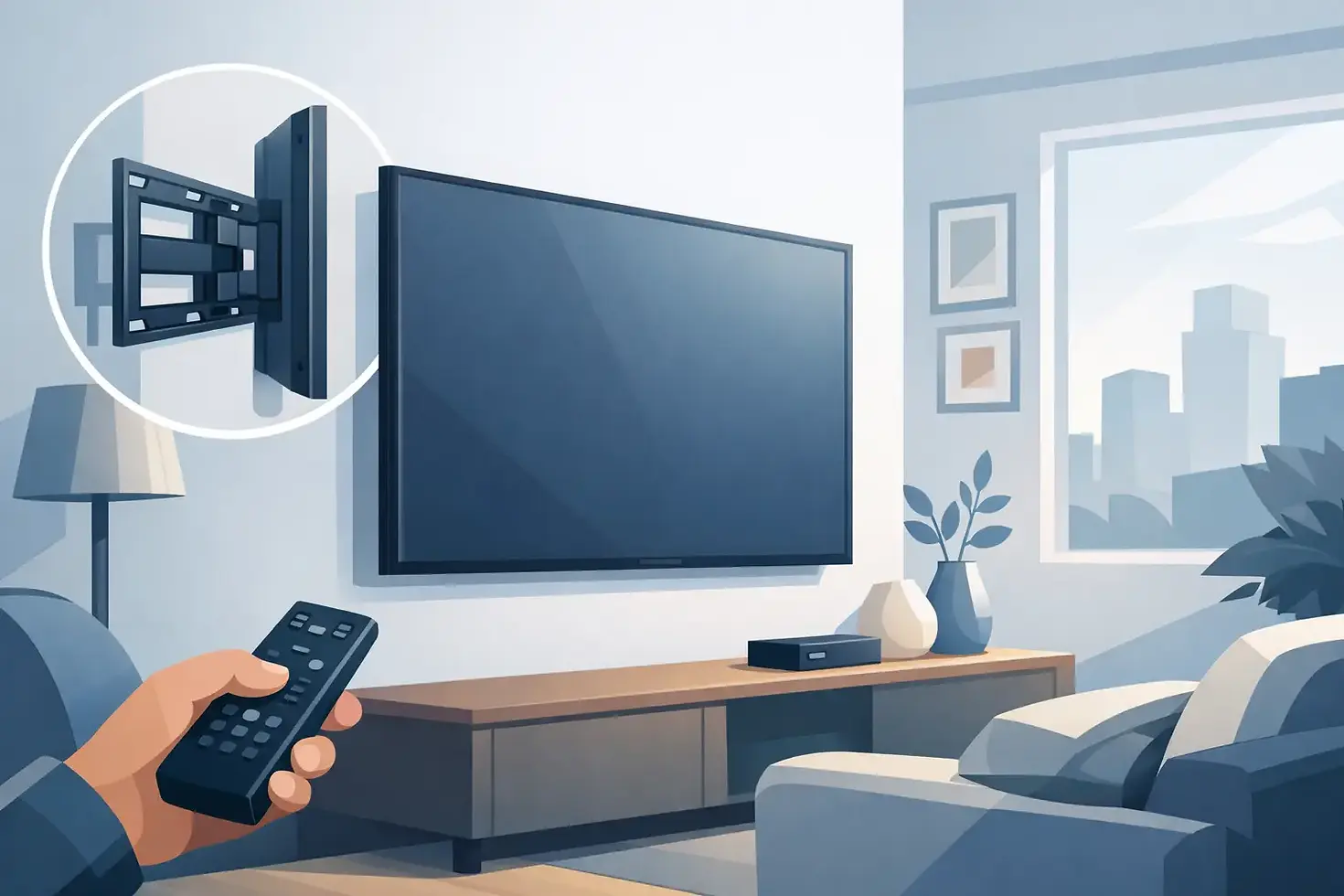
A flush TV mount, sometimes called a low-profile mount, is designed to hold the TV very close to the wall. That is its biggest strength and also the source of most of its trade-offs. If you want the screen to sit tight against the wall with minimal gap, this mount style does that better than tilting or full-motion options.
The visual payoff is real. In bedrooms, living rooms, offices, and waiting areas, a flush mount tends to look more polished because it avoids the “TV sticking out into the room” effect. It works especially well in spaces with modern furniture, built-ins, or wall features where a bulky bracket would interrupt the look.
It also has a practical side. Because the mount stays fixed, there are fewer moving parts compared with articulating mounts. That simplicity can mean less wobble and a very solid feel once the TV is properly secured. For straightforward viewing positions, that is a strong advantage.
Price is another reason people like them. Flush mounts are often more affordable than advanced full-motion systems. If you do not need swivel or tilt, paying extra for features you will never use does not make much sense.
Where flush mounts fall short
The same tight-to-the-wall design that looks great can make access harder. If you need to plug in streaming devices, change HDMI cables, or reset something behind the TV, a flush mount gives you less working room. Some mounts include pull-out tabs or quick-release features, but they still do not offer the same access as a tilting or articulating model.
Viewing angle matters too. A flush mount works best when the TV is installed at the right height and the main seating area is directly in front of it. If the screen is mounted too high, you cannot tilt it downward to improve comfort. In a bedroom, over a fireplace, or in a commercial waiting room with varied seating, that limitation can become a problem.
Wall conditions also matter more than many people expect. On paper, a low-profile mount sounds simple. In reality, the final result depends on stud placement, wall material, outlet location, and cable routing. If the wall has concrete, metal studs, tile, or a fireplace surface, installation needs more care. A clean look is only worth it if the setup is secure.
Who should buy a flush mount
This flush tv mount review comes down to one main question: do you want a fixed viewing position and the slimmest possible look? If the answer is yes, a flush mount is often a smart choice.
It is a strong fit for living rooms where the sofa faces the TV head-on. It works well in bedrooms when the screen height is planned correctly from the start. It is also a good option for offices, conference rooms, and lobbies where a clean presentation matters more than screen movement.
It is less ideal if multiple seating angles are involved or if glare is an issue. A room with side seating, lots of windows, or changing furniture layouts usually benefits from more adjustability. In those cases, a tilting or full-motion mount may be the better long-term decision, even if it sits farther off the wall.
Installation quality matters more than the mount itself
A lot of online mount reviews focus on the bracket and ignore the part that actually determines safety: the installation. Even a well-made flush mount can fail if it is attached incorrectly, overloaded, or installed without accounting for the wall type.
Stud alignment is one of the biggest issues. Many people assume the TV should be centered on the wall, but studs do not always cooperate with that plan. A professional installer knows when a mount can be safely adjusted, when a wider bracket helps, and when added support is necessary.
Weight rating is another area where mistakes happen. A mount may technically support the TV, but that does not mean every wall does. Drywall alone is not enough for most standard flat-screen installations. The hardware, anchor method, and backing support all need to match the wall and the screen.
Then there is cable concealment. A flush mount looks best when cords are managed properly. If cables hang below the TV, the main benefit of the low-profile look gets lost. Some homes allow in-wall cable routing. Others need external raceways for a neat finish. The right solution depends on the wall, local code considerations, and the devices you are connecting.
Flush TV mount review for common room setups
In a standard living room, flush mounts usually perform very well. You get a clean focal point, enough stability for daily use, and a setup that does not dominate the room. If the seating is centered and the TV height is carefully planned, there is not much downside.
In bedrooms, the decision is more mixed. A flush mount can still look excellent, but comfort becomes more sensitive to height. People often mount bedroom TVs higher than living room TVs, and without tilt, that can strain the neck over time. The cleaner appearance may not be worth the trade-off if you regularly watch while reclining.
Above a fireplace, a flush mount is often chosen for appearance, but that is not always the best functional choice. The TV may sit too high, and heat exposure has to be considered. This is one of those situations where the nicest-looking option is not automatically the right one.
For commercial spaces, flush mounts are often the best visual fit. Reception areas, waiting rooms, and meeting spaces usually benefit from a fixed, professional-looking installation. As long as the viewing angle works for the room, the result is neat, secure, and easy to maintain.
What to check before you decide
Before buying any low-profile bracket, confirm the VESA pattern, TV size compatibility, and weight rating. That is the baseline. After that, think about access. If you use multiple devices, game consoles, soundbars, or frequent cable changes, a very tight mount may become annoying fast.
You should also look at the back of the TV itself. Some models have recessed ports or connector placements that make close-wall mounting harder. Others are built with side-facing inputs that work much better in a flush setup. A mount review that ignores port placement is missing part of the real-world picture.
Finally, think about the room, not just the screen. A flush mount is excellent when the furniture layout is stable and the viewing position is predictable. It is less forgiving when the room has shifting needs.
For customers who want a secure, modern result without second-guessing stud placement, height, or cable routing, professional installation usually saves time and avoids expensive mistakes. That is especially true for larger TVs, specialty walls, and multi-room setups.
Final verdict
Most flush mounts deliver exactly what they promise: a slim, clean TV installation that looks sharp and feels solid. For straight-on viewing in a well-planned room, they are absolutely worth it. The catch is that they offer very little forgiveness after the fact. If the height is off, the cables are awkward, or the wall is more complicated than expected, that sleek design can become a hassle.
If your priority is a polished, space-saving look and your room supports a fixed viewing angle, a flush mount is one of the best choices available. If you need flexibility, frequent access behind the TV, or help getting the placement exactly right, it makes sense to have an experienced installer handle it. A TV should look clean on the wall, feel secure every day, and work for the way you actually use the room.


